Free · 812 questions · no account

You have read fifteen articles. They contradict each other. That is not your fault.

A terrier cross on a suburban pavement at dusk, watching something down the street.

It is the actual state of the field: no head-to-head trial exists for any of the named protocols for leash reactivity, and the sources you have been reading know it. You are not short of information. You are short of a decision.

Start the free read812 questions. An honest answer, including what the read cannot tell you.
A woman walking a small dog on a lead along a quiet suburban pavement, another dog visible far down the street.

The number this whole thing is named after

Your dog has a threshold. You can go outside and measure it.

under — training worksover — nothing doesacross the park50 ft25 ft10 ftright theredifficulty →closer · harderwhere the plan aimsthe threshold
reactivitydifficulty = how close the other dog isseparationdifficulty = how long he is aloneyellow ribbon"this dog needs space"
Every dog has a distance — or, if the problem is being left alone, a duration — where he can still hear you. Under it, training works. Over it, nothing does, and the afternoon sets you back. Finding that number is the whole job, and it is the first thing this quiz tries to establish.

8 recorded · 7 we show buyers

Three arguments you have been caught in the middle of

These are real, current disagreements between credentialed sources. We keep a written record of every one we hit, which side we take, and why — because telling you where the advice splits is more useful than pretending it does not.
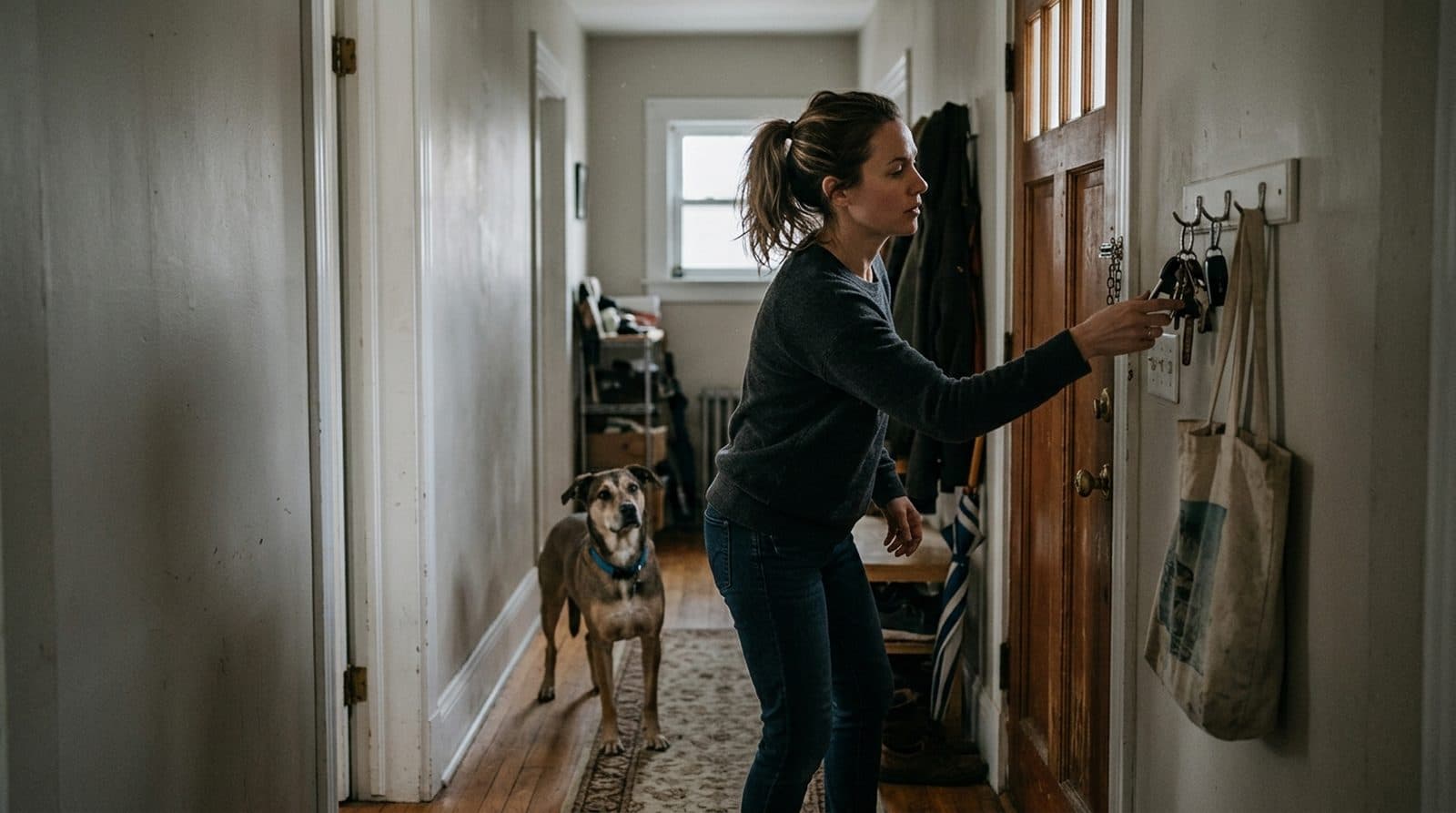
An owner lifting keys from a hook by the front door while her dog watches from the hallway.
Keys off the hook. The argument is about this exact moment.

Should owners rehearse departure cues (keys, coat, shoes) without leaving, before starting absence training?

One camp says

Expose the dog to departure cues (keys, coat, shoes) multiple times daily, without leaving, for several weeks, to desensitize the dog to the cues themselves before working on absence duration.

ASPCA / VCA Hospitals

The other says

Repetitively rehearsing departure cues isn't desensitizing the dog — it's likely sensitizing it, because the cues only carry emotional weight because of the dog's underlying fear of separation itself. Skip dedicated cue rehearsal and go straight to desensitizing the separation; cues reportedly 'naturally lose their emotional charge' once the dog tolerates roughly 15 minutes of comfortable separation.

Sara Scott, CSAT (Certified Separation Anxiety Behavior Consultant)

Where we stand — in writing

We follow neither camp. The IAABC Foundation Journal literature review of 14 SA studies found desensitization-to-cues recommended in 5/14 and 'unpredictable departures' in 3/14, and states outright it is 'unclear which components of a behavior modification plan are the most effective' because study designs bundle components together. Neither side is peer-reviewed head-to-head. The library builds plans around the graduated absence-duration protocol as the throughline and does not present cue-desensitization as settled either way.

A crouching handler and a terrier both watching another dog further down the street.
Under threshold, both dogs visible. The argument is what you do next.

Should reactivity counter-conditioning be food-driven and non-contingent (DS/CC), or built around the dog's own choice to gain/lose distance (BAT 2.0)?

One camp says

Feed continuously and non-contingently the instant the trigger appears, stop the instant it's gone ('Open Bar/Closed Bar'). The dog isn't asked to do anything — the method changes how the dog feels, not what it does.

Jean Donaldson (Dogs Are From Neptune / DS-CC)

The other says

Heavy food-based counter-conditioning over-relies on food as a distraction rather than letting the dog actively process the trigger. BAT instead uses what the dog actually wants in that moment — space — as the reinforcer, rewarding the dog's own voluntary calm/retreat behavior so it learns active coping and agency rather than passive emotional reconditioning.

Grisha Stewart (Behavior Adjustment Training 2.0)

Where we stand — in writing

We follow neither camp. No peer-reviewed head-to-head efficacy trial exists for either method, or for any of the four named reactivity protocols reached in this research. They also target different mechanisms — passive emotional reconditioning via food vs. active agency via functional reward — so which fits a given dog is a protocol-selection question, not a matter of one method being objectively superior.

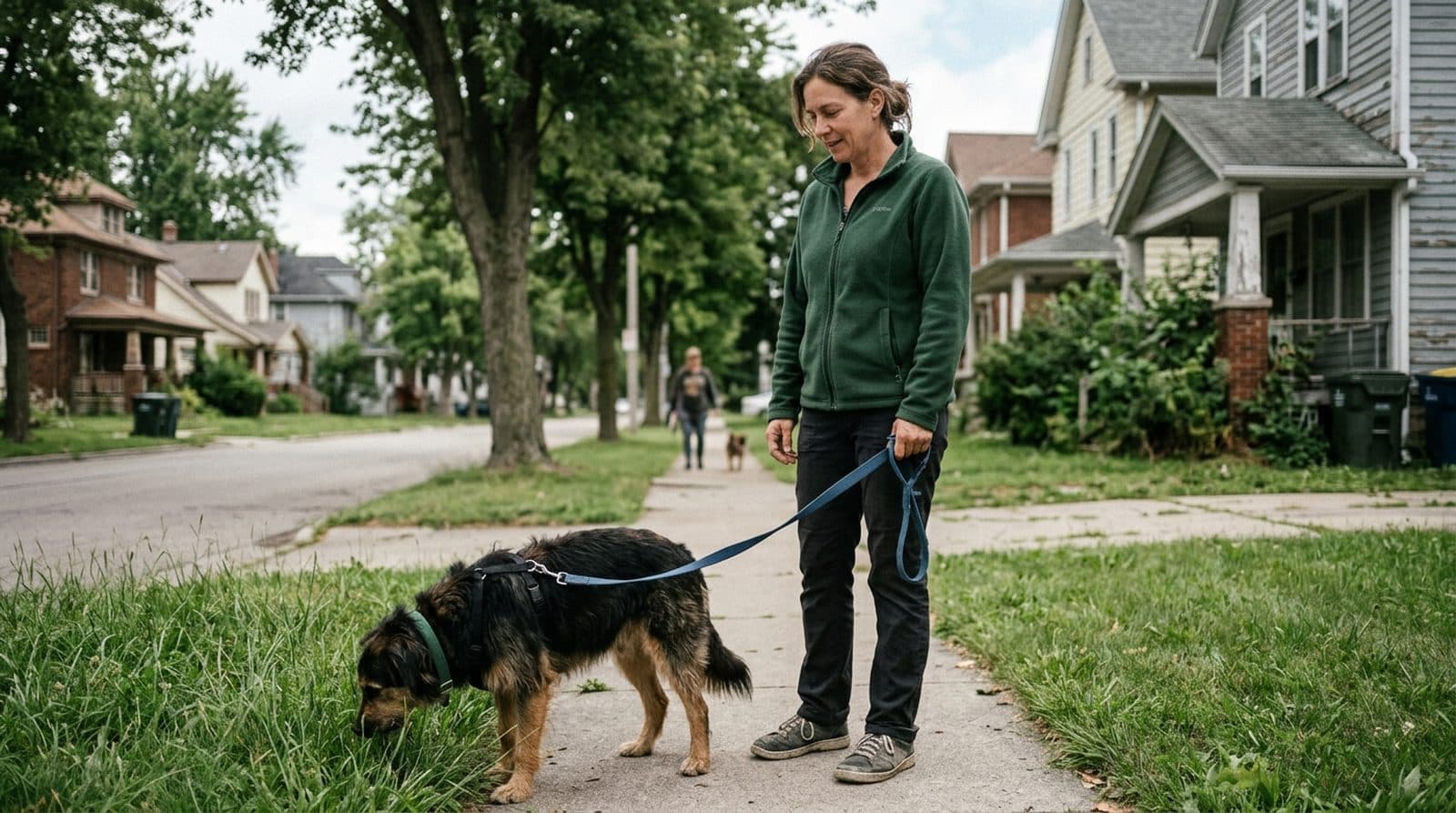
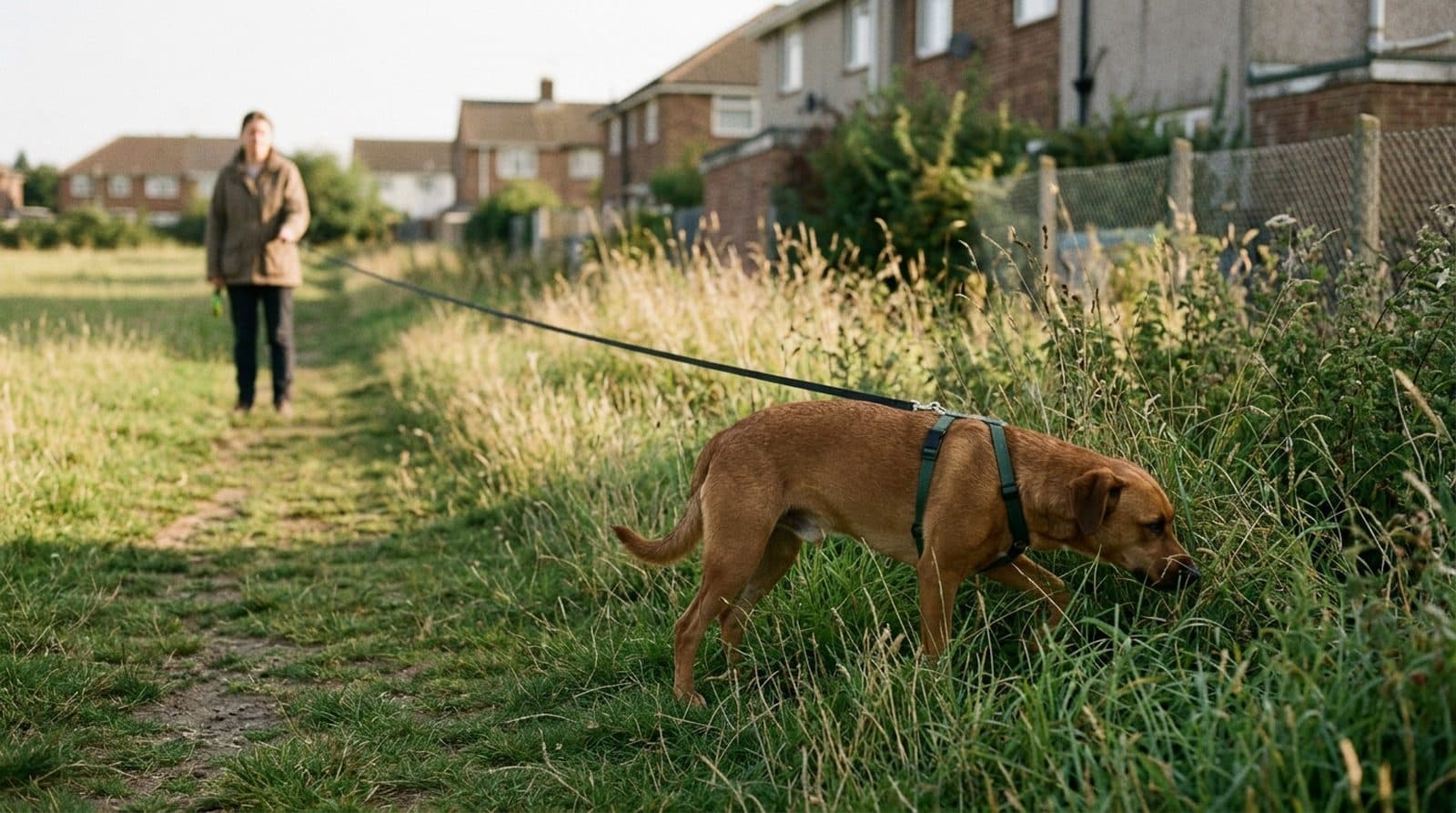
A dog sniffing through long grass on a long line, its owner standing well back.
A long line in long grass. The argument is whether this replaces the walk.

Should reactive dogs get a full break from on-leash walks ('walk holiday') early in training, or just modified walks?

One camp says

Take a full break from structured on-leash walks ('walk holiday') during early reactivity treatment.

Popular reactive-dog-community shorthand — no named authority located using this exact term/protocol

The other says

Modify walk timing and route ('walk your dog when others aren't out, and avoid the dog park') and add unstructured, dog-led decompression walks (off-leash or long-line, low-stimulation) as an adjunct — but not as a substitute for training if the dog is genuinely reactive.

Cornell Riney Canine Health Center + Sarah Stremming (The Cognitive Canine)

Where we stand — in writing

We follow position B. No named authority in this research recommends stopping walks entirely; Cornell (route/timing modification) and Stremming (decompression walks as an adjunct, explicitly not a substitute for training a genuinely reactive dog) both converge on modify-and-supplement, not eliminate. 'Walk holiday' as full cessation is community shorthand that outruns its sourcing.

Free, then $99

What you get, in order

The read is free and complete on its own. The plan is what you buy if you want somebody to make the calls.
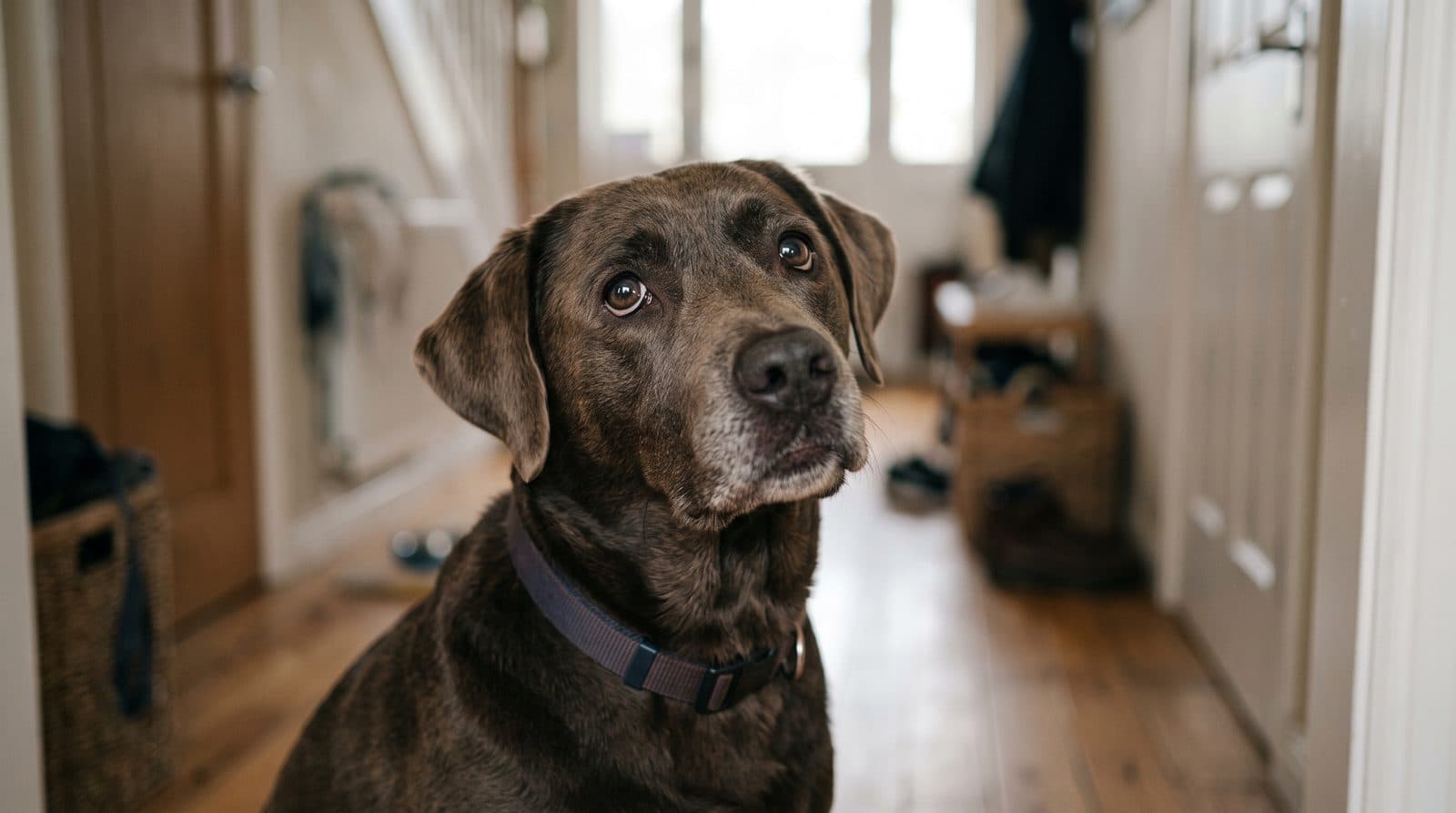
  1. A brown labrador sitting in a hallway, looking up at the camera.
    Free

    The read

    Which pattern the answers point at and how confident that is, what is actually happening in your dog, the three things most likely making it worse right now, a realistic timeline, and a plain list of what the read cannot establish.

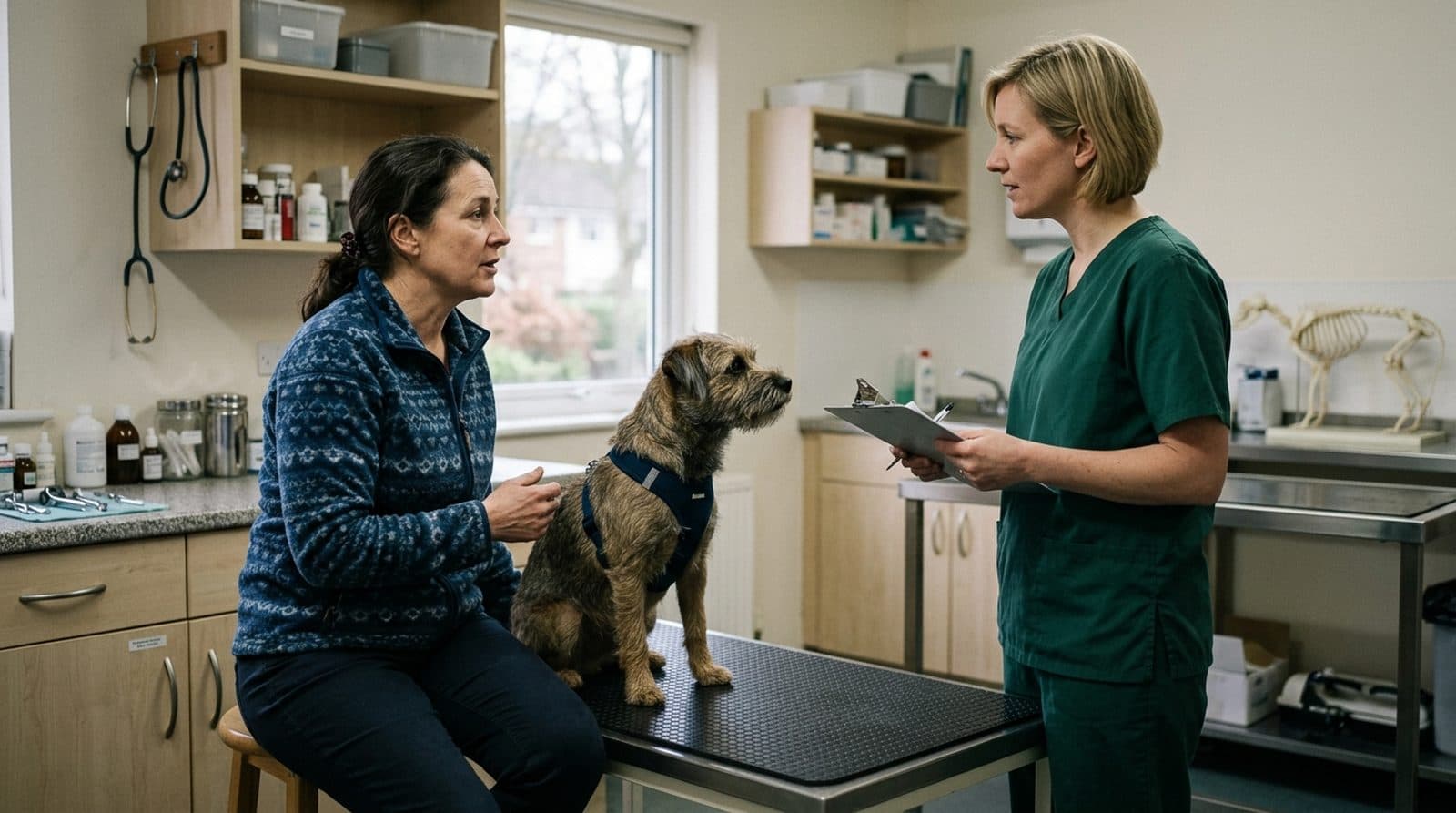
  2. A dog on an examination table with its owner and a vet in a consulting room.
    Free

    The safety check

    Six situations get routed away from us on the spot — a bite that broke skin, a sudden onset in an adult dog, self-injury. You get the referral directory and the questions to ask, not a sales page.

  3. Hands writing in a ruled notebook on a table beside a coiled leash.
    $99

    The plan

    A deep intake, then a week-by-week programme for your dog: management rules first, then the progression, with the distance or duration to start at, the criterion to advance, and what to do when a week goes badly. Equipment with reasons. Printable walk cards.

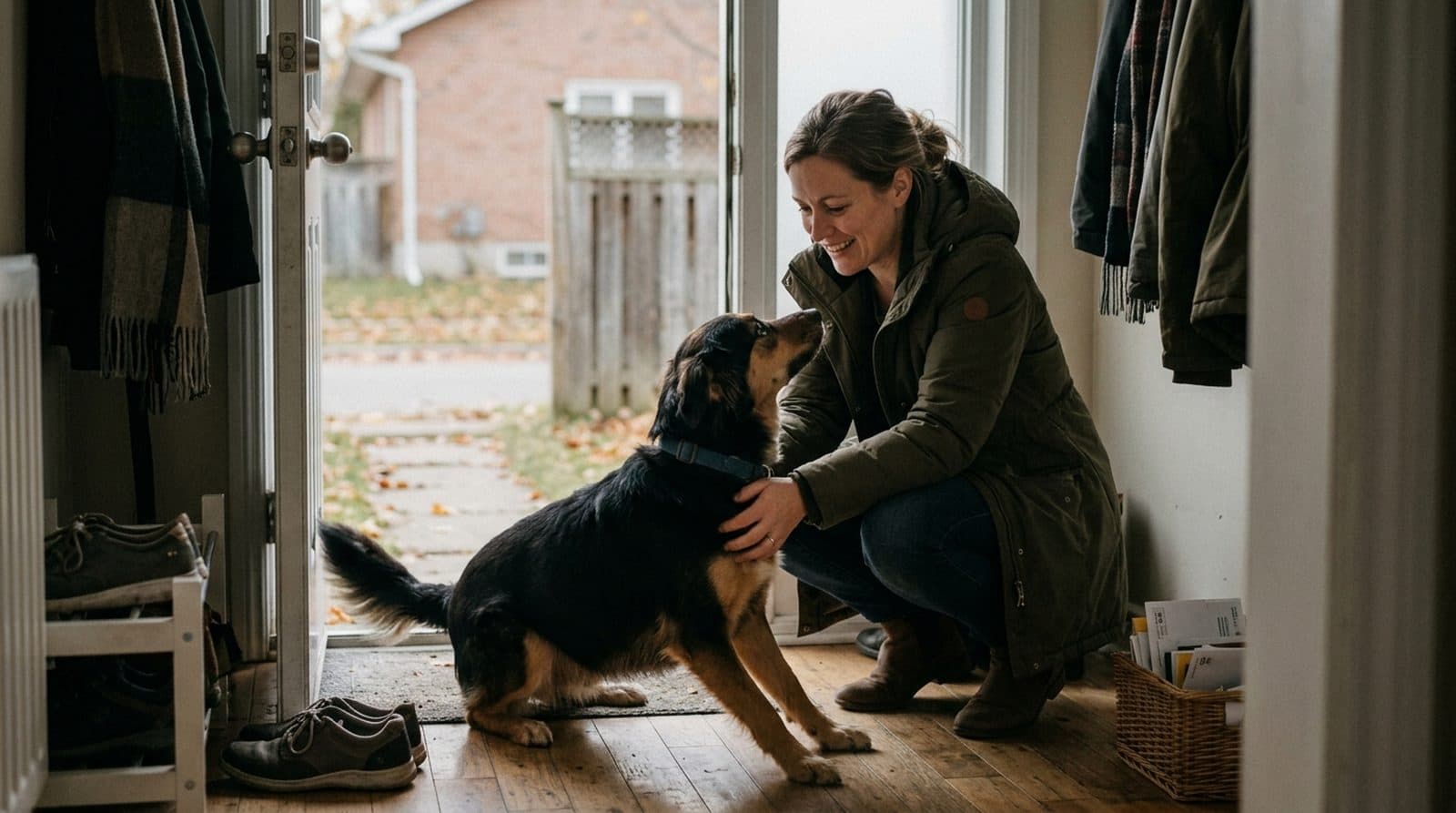
  4. An owner crouching in a hallway to greet her dog calmly.
    $99

    A person reads it

    Every plan is reviewed and corrected by a human before it is sent. If your intake turns out to be one we should not have sold to, you get a refund and a referral rather than a plan.

The limits, up front

What we will not do

Every one of these costs us sales. They are the reason to trust the parts that do not.

  • No medication advice, ever

    Not a drug name, not a dose, not a hint. That conversation belongs to your vet, and we will tell you what to bring to it.

  • No plans for dogs with a bite history

    A bite to a person, or any bite that broke skin, goes to a veterinary behaviourist. We refund and refer instead of selling.

  • No promises measured in days

    No universal fixed-duration target across sources. Naismith (FAQ): success = the owner's real-life target duration — 'leave for normal amounts of time — work, errands, social events — without any distress' — not a fixed number.

  • No aversive tools and no settings advice

    Prong, choke and shock collars are the three things in the equipment library marked never. If you use one, the plan starts with the swap, not a lecture.

  • No selling you a plan you do not need

    If the answers point at an under-occupied dog rather than an anxious one, we say so and tell you what to try for free first.

  • No claiming evidence we do not have

    Exactly two claims in this entire library are backed by controlled trials. Everything else is labelled for what it is: standard practice, one specialist's method, or an open argument.

Exactly two claims in our whole protocol library are backed by controlled trials. We tell you which two. Everyone else in this field has the same problem — we are just the ones writing it down.

Before you start

Questions people actually ask

How is this different from an online dog training course?
A course teaches you a method and leaves the judgement calls to you. What you get here is the judgement: which protocol fits the evidence in your intake, at what distance or duration to start, when to move up, and what to do on the day it goes wrong. Every plan is read and corrected by a person before it reaches you.
Will this fix my dog?
Nobody honest can promise that, and the field does not have the data to support it either — there is no published success-rate study for separation anxiety treatment and no head-to-head trial for any of the named reactivity protocols. What we promise is a plan built for your dog from sourced protocols, and a refund inside 14 days if you are not happy with it.
How long does this take?
Weeks to months, not days. Practitioners report some dogs reaching an hour alone within a few weeks and others taking several months, and the most authoritative clinical source treats severe cases as potentially lifelong management. Any product that gives you a number in days is selling you something.
My dog has bitten someone. Can you help?
No, and we will say so before you pay rather than after. A bite to a person, or any bite that broke skin, needs somebody who can see the dog and the household in person. The quiz routes those cases to the veterinary behaviourist and behaviour consultant directories instead.
Do you give advice about medication?
Never. Medication is a legitimate, evidence-supported part of treatment for many dogs, and whether any specific drug suits yours is a decision for your vet or a veterinary behaviourist. What we can do is tell you what to bring to that conversation.
Do you use shock, prong, or choke collars?
No, and we will not tell you how to set one either. The controlled welfare trials on e-collars are the strongest evidence in this whole library, and they point one way. If you currently use one, the plan opens with a straight swap rather than a lecture.
A dog asleep on a rug in a lamplit living room while its owner reads on the sofa.

Start with the free read.

812 questions, about four minutes, no account. You will know what pattern your dog fits, how sure we are, and whether ThresholdDog is even the right thing to buy.

Start the free read